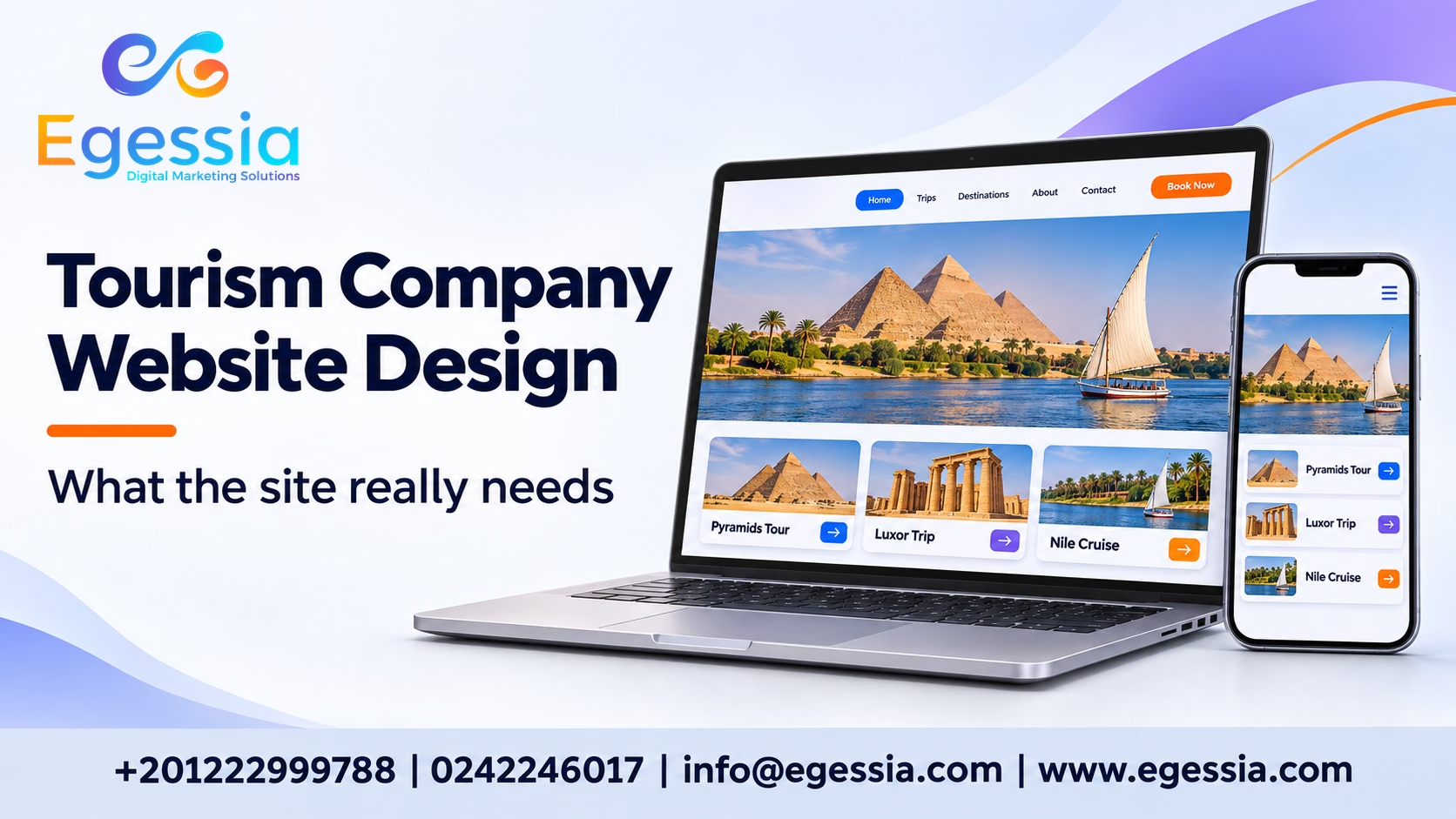
Tourism Company Website Design: What the Site Really Needs
Short answer: tourism company website design does not start with colors or a template. It starts with understanding how the company works and what a visitor needs to know before sending an inquiry or requesting a booking. A domestic trips company differs from an inbound tourism company, and a Hajj and Umrah site differs from the site of a tour operator or a travel agency with several service types.
A good site organizes these services into clear pages, shows program details in a way that helps customers compare, and puts the contact or booking request in the right place. You may need an informational site with an inquiry form and WhatsApp, or a more advanced site with customer accounts, payment and availability management. The right decision depends on your real operating model, not on adding as many features as possible.
Table of Contents
- Why does a tourism company need an organized website?
- What are the core pages of a tourism company website?
- Key features of a professional tourism company website
- Direct booking or inquiry request?
- How does content help the site appear in search?
- What to prepare before design starts
- Tourism company website design with Egessia
- Frequently asked questions
Why Does a Tourism Company Need an Organized Website?
A tourism customer handles many details before deciding: the destination, trip length, dates, included services, exclusions, cancellation policy and how to get in touch. If this information is spread across social media posts or out of date, it is hard for the customer to find a clear answer.
A website gives the company a fixed place to organize its services and programs, with the ability to update trips and prices or ask for the price when needed. It also allows a separate page for each program, so it can be shared in ads or messages instead of sending a long file or scattered information.
A website does not guarantee more bookings or first-page visibility, but it provides a base that can be measured and improved: pages that search can reach, clear contact paths and data that shows which pages visitors care about.

What Are the Core Pages of a Tourism Company Website?
Home Page
It summarizes the trip types, services and markets the company serves, and directs the visitor to the main destinations or programs. A clear contact method should appear, but the page should not become a set of repeated buttons with no information.
Trips or Programs Page
It organizes programs by destination, type or season when that fits. Each trip card can show the program name, an approximate duration or a fixed date, a suitable image and a link to the details. Do not show an old price or unconfirmed availability. Use “Request price” when the cost changes often.
A Separate Page for Each Program
This page is the heart of a tourism site. It is best to include:
- A short description of the trip and the audience it suits.
- The itinerary or daily program when available.
- Included and excluded services.
- Dates, or how to ask about them.
- The booking and cancellation terms the company uses.
- Real or licensed images that suit the destination.
- An inquiry form linked to the program name.
Specialized Service Pages
If the company offers separate services such as domestic tourism, inbound tourism, hotel booking, tourist transport or corporate programs, give each real service its own clear page instead of putting them all in one paragraph.
About, Contact and Policies
The About page explains the nature of the company and the services and details it can prove. The Contact page gathers official channels and reply hours when they are set. Privacy, booking and cancellation policies must reflect the company’s real procedures and be reviewed legally when needed.
Key Features of a Professional Tourism Company Website
A Good Mobile Experience
Visitors often open a trip link on their phone, so text must be easy to read, images proportionate, buttons clear and the form short. A floating WhatsApp button should not cover page content or cookie consent buttons.
Suitable Loading Speed
Tourism sites use many images, but uploading them at original size slows pages. The fix is to choose suitable dimensions, compress files, use modern formats and load images that are not immediately visible only when needed. Speed here is part of the user experience, not a number separate from page quality.

Easy Trip Management
Your team needs to add a new program or edit details without breaking the design. So define the repeating fields from the start, such as destination, duration, services and images, then build a clear editing method for them in the admin panel.
Separate Languages When Targeting Different Markets
If the company speaks to customers in Arabic, English or other languages, you need translated and reviewed pages for each language, not automatic translation inside the same page. Language links, direction, headings and metadata should be set for each version.
Protecting Forms and Data
An inquiry form collects data the customer sends voluntarily, so ask for the minimum needed, use a secure connection, limit spam and explain the privacy policy. Do not ask for sensitive payment data inside an ordinary form.
Direct Booking or Inquiry Request?
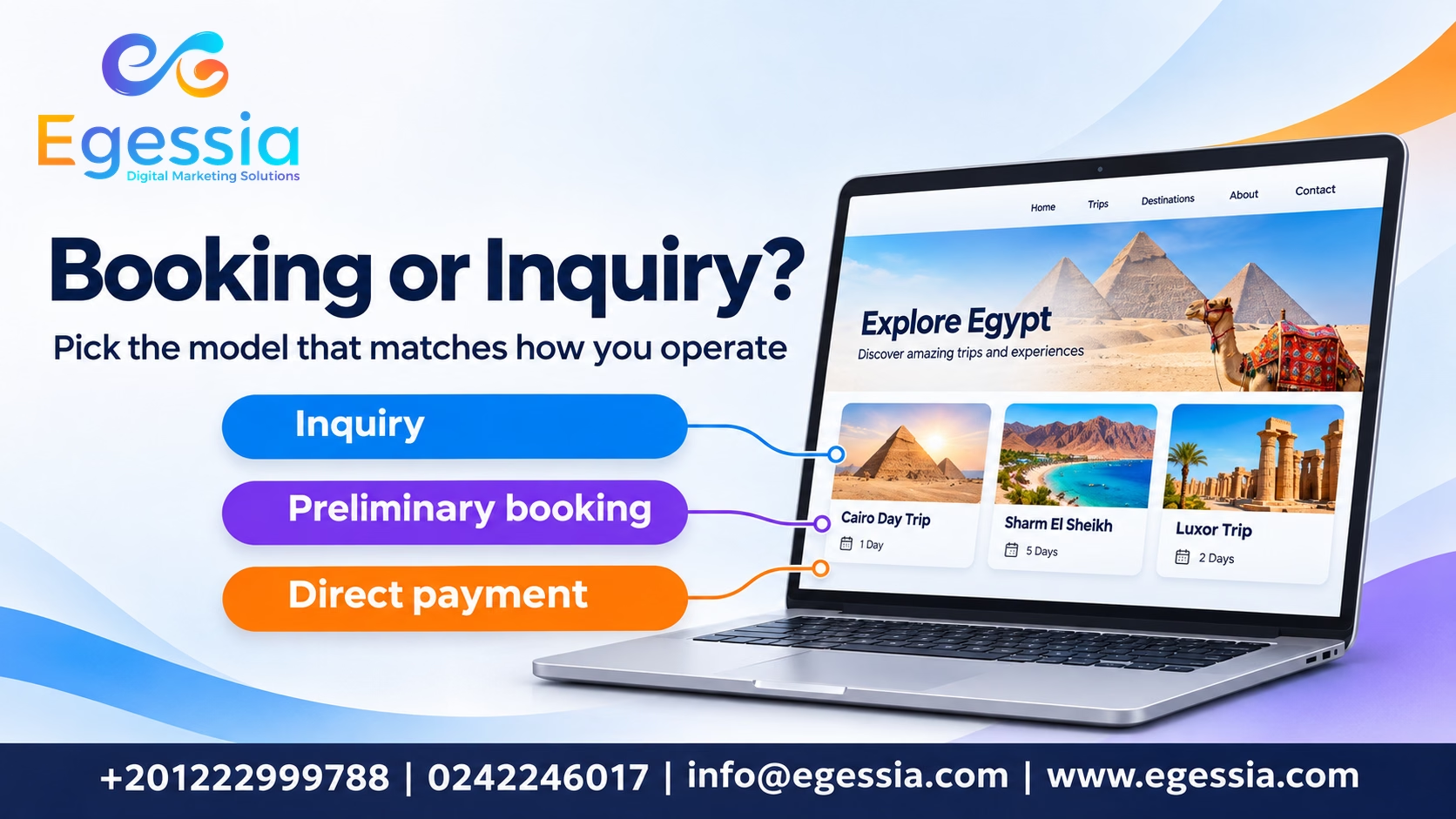
Not every tourism company needs a full booking engine. There are three common models:
- Inquiry request: suitable when staff need to confirm price or availability before booking.
- Preliminary booking: the customer picks the program, date and number of travelers, and the company reviews it before confirming.
- Direct booking and payment: needs clear rules for availability, prices, cancellation and payment, plus ongoing operation and follow-up.
The model should follow how you work today. Adding direct payment without connecting it to availability management can create orders the company cannot fulfill, while relying on WhatsApp alone can make measurement and organization hard as inquiries grow.
How Does Content Help the Site Appear in Search?
Search setup starts with an understandable structure: a page for each core service, program pages with precise titles and internal links that help visitors and search engines understand how they relate. The content should describe what the company really offers and answer the questions that come before booking, without stuffing keywords.
Articles can support service pages by explaining topics such as choosing a program, documents according to official sources, or differences between trip types. Prices and dates that change must be updated or shown in a way that does not suggest they are fixed.
For the conversion and request-handling side, read the guide on travel and tourism website design. To plan the budget, see the factors that set the cost of a tourism company website. Before contracting, use the criteria for choosing the best tourism website design company to compare scope, ownership and support. You can also review the website design service for the general scope.
What to Prepare Before Design Starts
The clearer the inputs, the easier it is to estimate and review the scope. Prepare a list of services and destinations, customer types, how you receive bookings, required languages, and the content and images you have. Decide who inside the company will approve text and design and who will update programs after launch.
It also helps to write out two or three trips in their final intended form. These examples show early whether the company needs extra fields, filtering or a different template for each program type.
Tourism Company Website Design with Egessia
Egessia starts by defining the service and trip types, the audience and how requests are received, then prepares a scope you can review before work begins. Depending on the project, the offer can include:
- Planning the site structure and the service and program pages.
- Designing responsive interfaces for mobile and desktop.
- Setting up organized templates to add and update trips.
- Building an inquiry or preliminary booking form, or studying booking and payment where needed.
- Setting up languages, integrations, measurement and technical setup within the agreed scope.
- Stating training, support, licenses and recurring costs in the offer.
The solution may be an organized informational site, a multilingual site, or development that includes booking and integrations. What is included is fixed in the scope of work, not assumed from a package or service name.
Design alone cannot set a guaranteed marketing result or search ranking. What can be evaluated is the scope of delivery, the soundness of the structure, ease of use, and the ability to measure and develop after launch.
Do you have an existing site or an idea for a new one? Request a quote for your tourism company website on WhatsApp, and send your service types, number of languages, booking method and your current site link if you have one. We use this information to define a scope you can compare, not to promise rankings or bookings.

Frequently Asked Questions
Does a tourism company website need online payment?
Not always. It depends on whether the company can confirm price and availability automatically, and on its booking and cancellation procedures. An inquiry request or preliminary booking may suit some companies better.
Can trips be added from the control panel?
Yes, if programs are built as an organized content type with clear fields. Decide the data that repeats on every trip before development starts.
Is one page enough to show all programs?
It may be enough for a very small number of services, but a separate page for each program gives room for details, sharing and appearing for more specific searches.
Does a multilingual site repeat the same content?
Each language should have its own pages, links and metadata, with human translation suited to the audience. Unreviewed automatic copying can weaken understanding and trust.
What decides the cost of a tourism website?
The scope of pages, the design method, the number of languages and programs, booking, payment and integrations, content and the agreed support. The number of pages alone is not enough to compare offers.