SEO-Friendly Website Design: How to Prepare Your Site for Search Engines
Short answer: SEO-friendly website design means building the site from day one with page structure, URLs, headings, internal links and room to grow in mind. A site does not start improving its search visibility only after launch. Decisions made during planning and design can later affect whether search engines understand the site, reach its pages and index them, and whether the company can add new content and services.
This article is not a full guide to SEO, a monthly plan, link building or keyword research. The focus is: what should you consider while designing the site so its structure does not block SEO later?
What Does SEO-Friendly Website Design Mean?
An SEO-friendly design takes into account how information and pages are organized from the start, so that users and search engines can understand the content of the site and the relationship between its sections.
It covers how page structure is built, how content headings are organized, clear URLs, internal links between pages, service pages, site speed and mobile, and the ability to add new content without disturbing the existing structure.
In other words, SEO here is not a layer added on top of the design after it is finished. It is one of the considerations that go into planning the site itself.
An SEO-friendly site does not mean a site built only for search engines. It means an organized site that users can understand and whose content search engines can reach clearly.
Why Does SEO Start at the Design Stage?
A site can be improved after launch, but some changes get harder when it has been built on an unsuitable structure.
A company may start with a few pages, then later need new services, a blog section, product pages or content aimed at different segments. If the structure cannot scale, adding these pages can become random.
When the structure is considered from the start, the site is easier to develop without changing how it is organized at its root. This is a core part of website design that serves the company’s current and future goals.
Website Page Structure and Why It Matters for Search
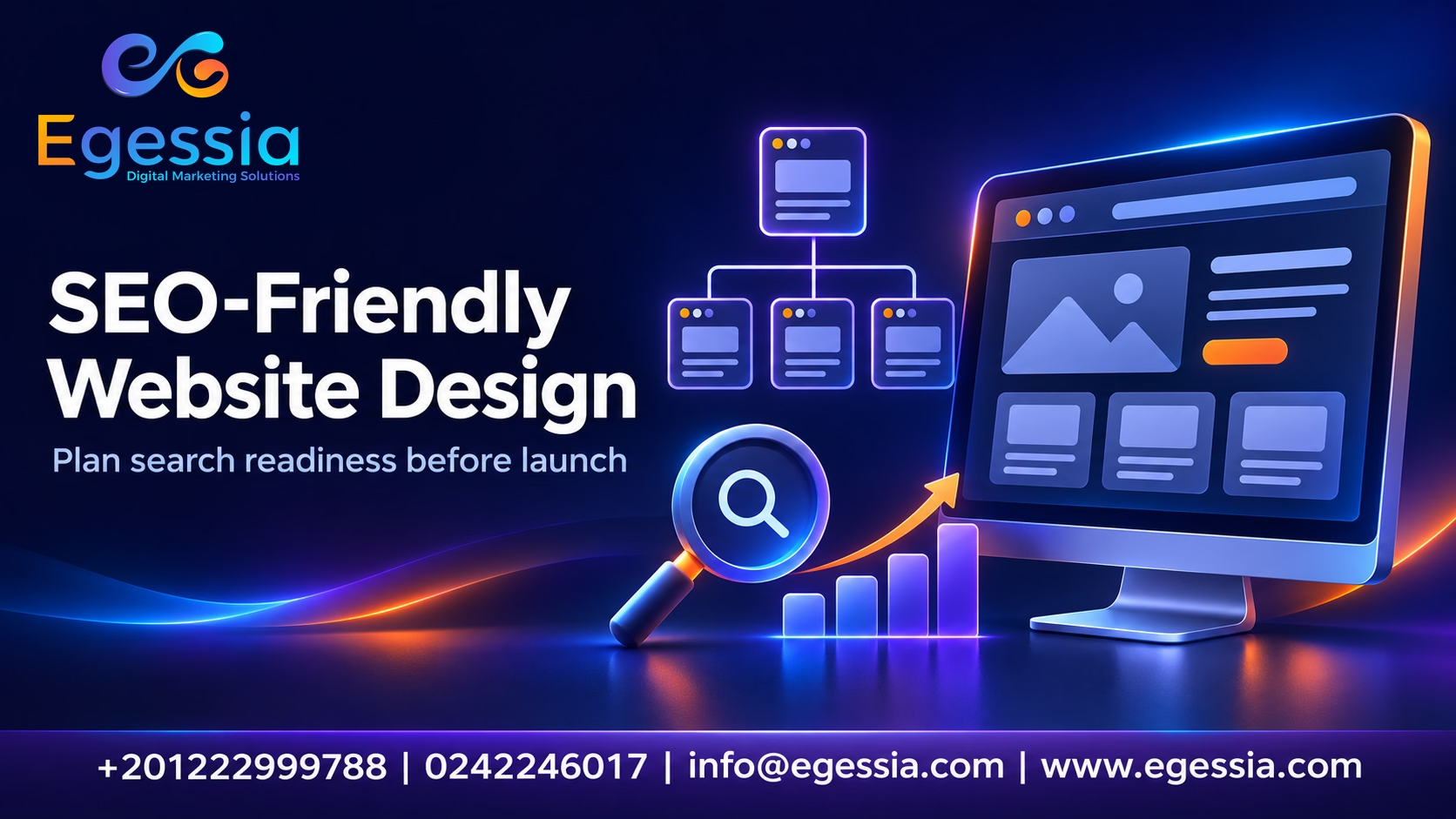
Site structure shows how pages relate. The home page links to the key sections, sections link to their child pages, and specialist content can link to the related commercial pages.
When these relationships are clear, it is easier for users to move around the site, and easier to discover pages and understand how they connect.
The goal is not the largest number of pages. It is a logical structure with a clear order that can be developed over time.
| Element | What to consider |
|---|---|
| Main pages | A clear entry point to the important sections of the site. |
| Child pages | Linked to the right section and never isolated. |
| Services | New services can be added without changing the whole structure. |
| Content | Can be linked to the related commercial pages. |

URL Structure: Make Links Clear from the Start
The URL is part of the site structure, so it is best to think about it before creating many pages.
A good link is clear and understandable and reflects the page the user reaches. Links should also be written consistently across the site instead of using different patterns with no system.
Avoid changing URLs without need, especially once pages have started appearing in search. If a change is necessary, handle it correctly so old pages are not affected.
H1, H2 and H3 Headings in the Design
Headings are not just visual elements. They are part of how page content is organized, so they must be handled during design in a way that allows a logical content sequence.
Usually each page has one clear main heading, and the content is then split into subheadings by topic. This helps users understand the page and gives search engines clearer signals about the content structure.
1. The H1 Main Heading
It expresses the main topic of the page and should be clear and suited to the actual content.
2. H2 Subheadings
They divide the page into main topics and make the content easier to read and organize.
3. H3 Headings
They split details inside sections when the content needs extra levels of organization.
The aim is not to stuff headings with keywords, but to build an understandable sequence that serves the page and the user.
Internal Linking Should Be Part of the Structure
Internal links connect pages to each other, so think about them from the site planning stage.
A service page can link to other related pages, educational content can support the commercial pages, and main pages guide the user to the most important sections.
This does not mean putting an internal link in every sentence. It means building a logical network that helps users and search engines discover related pages. Organizing the site this way also makes it easier to add articles and pages later without each page being separate from the rest of the content.
Service Pages and SEO Compatibility
Service pages are among the most important page types on company sites, so the structure should be ready to hold them in an organized way.
If a company offers five services today, it may offer ten later. The design should allow these pages to be added within the same structure, while keeping URLs, headings and internal links clear.
Each service page should also target one clear topic, instead of creating several similar pages aimed at the same meaning that compete with each other in search. This keeps the site scalable without internal conflict between pages.
Scalability: The Site Should Not Stop at Its Current Content
One of the most common mistakes is designing a site around only the company’s current needs. A good site should handle content growth.
A company may need to add a new section, service pages, products, specialist articles or pages aimed at a particular sector.
- The ability to add new service pages.
- The ability to create a content section and expand it.
- Adding product pages without changing the site structure.
- The ability to create new internal links.
- Keeping URLs organized as the site grows.
- No need to rebuild the structure with each expansion.
Scalability matters because SEO itself depends on the site’s ability to take in new content and pages over time.
Speed Is Part of SEO-Friendly Design
Site speed should be considered during design, because some decisions about images, elements and pages can affect performance.
But speed is not the whole of SEO by itself, and an SEO-friendly design does not mean reducing SEO to load time.
The idea is not to build the site in a way that makes performance a problem that needs a large fix after launch. Performance is part of build quality, and the effect of speed on user experience and conversion can be analyzed in more specialized content.
Mobile Must Be Part of the Design from the Start
Search engines and users reach sites on different devices, so the design must be usable on mobile, tablet and desktop.
The point here is not to explain mobile design in full, but to make sure page structure, content and key elements stay accessible and usable on different screens.
It is better to think about this during design than to build a complete desktop version and try to adapt it to phones later.
Crawlability and Indexing
For a page to appear in search, search engines must be able to reach it, understand it and index it when it qualifies.
So important pages should not be isolated inside the site or hidden behind a complex structure of links.
Page organization, internal links, URL structure and the absence of unnecessary barriers to content are all important when building the site.
Also pay attention to pages you do not want to appear in search, so they are handled on purpose instead of letting indexing happen at random.
Schema: Use It When It Fits
Structured data (schema) can help search engines understand the type of content on some pages, but it should not be added randomly to every part of the site.
During design you can identify the content types that may benefit from structured data, then implement the right type when the conditions are met.
What matters is that structured data reflects the real content of the page, and is not used to give search engines information that is not actually there.
Preparing the Site for Future Content
One of the main advantages of SEO-friendly website design is that the site is ready to take in new content.
A company may start with a few articles, then need to publish specialist content that targets customer questions. It may also add new pages for services, products or sectors.
If the design allows this growth, developing the site becomes easier and better organized.
A site designed for growth does not need its structure rebuilt every time the company adds a service or a new set of content.
How Do You Prepare the Site for Content Before Launch?
Before starting the final design, think about the type of content the site will hold in the future, not only what will be published on launch day.
If the company plans to publish continuously, there should be a clear place for articles, and the category and navigation system should be able to grow.
If the company offers several services, the structure should allow new pages to be added without creating duplication or illogical levels.
Does SEO-Friendly Design Guarantee Top Google Rankings?
No. This is a very important point.
An SEO-friendly design provides a good foundation, but it does not guarantee first place in search results.
Visibility depends on many factors, including content quality, how well the page matches search intent, competition, site strength, performance and other aspects.
So treat SEO-friendly design as a foundation, not a promise of top rankings.

What Is the Difference Between Site Design and SEO After Launch?
SEO-friendly design deals with the foundation the site is built on. SEO after launch is a wider scope that continues as the site grows and as competition and search needs change.
| During design | After launch |
|---|---|
| Page structure | Improving existing pages |
| URL structure | Monitoring pages and errors |
| Headings and content organization | Developing content |
| Scalable internal linking | Expanding the link network as content grows |
| Ability to add new pages | Creating and developing new pages |
This difference matters so that a site prepared to launch is not confused with carrying out an ongoing SEO strategy.
How to Avoid SEO Problems Before Launch
- Define the page structure before the final design.
- Plan the URL structure consistently.
- Keep headings organized and clear.
- Plan internal links between related pages.
- Make sure new services and content can be added.
- Consider mobile and performance during design.
- Decide which pages should be indexable.
- Use schema only when it fits.
- Avoid creating similar pages that target the same topic without need.
SEO-Friendly Design Serves the Company in the Long Term
A website is not a project that ends once the pages are published. For companies, a site can become a digital asset that grows with services, content and search visibility.
That is why designing it to scale gives a better foundation for the next stages.
The page on the importance and benefits of designing a website for your company explains how a site can act as a tool for introducing the company and supporting contact and digital visibility, not just an online front.
Where Good Site Planning Pays Off
When the site is organized from the start, adding content and services is easier. An SEO team can also work on the site without having to fix, every time, basics that were better placed during design.
If the structure is unclear, problems may appear with links, pages, categories or indexing as the site grows.
So the question before launch should not only be “does the design look good?” but also “can this site grow without losing its organization?”
Egessia’s Role in Designing Search-Ready Websites
At Egessia, the website is treated as part of the company’s digital marketing system. So the design process includes thinking about page structure, headings, internal links, scalability, mobile, speed, and preparing the site to be built on later.
It is important, though, to separate preparing the site during design from carrying out a full SEO strategy. The latter includes ongoing work beyond the build stage.
To learn the scope of website design services for companies, see the web design section, which gathers specialist content on company websites, service pages, speed and preparing sites for search engines.
Frequently Asked Questions About SEO-Friendly Website Design
What does SEO-friendly website design mean?
It means designing the site with page structure, URLs, headings, internal links, crawlability and indexing, mobile, performance and scalability in mind.
Does SEO start after the site launches?
SEO can be carried out after launch, but it is better to consider the basics during design so the company does not have to rebuild parts of the site later.
Does SEO-friendly design guarantee a top ranking?
No. A design prepared for search engines provides a good foundation, but it does not guarantee a specific position in search results.
Is URL structure important in website design?
Yes, because link structure is part of how the site is organized, and it is best to set a clear system for it before creating many pages.
Is internal linking part of website design?
Yes. The site structure should let you link important pages and related content in a logical way.
Is schema necessary for every site?
It is not necessary for every element or page. Use it when it fits the content type and implement it correctly.
Can new services be added after launch?
Yes, if the structure was built from the start to scale and allow new pages without disturbing the site structure.
Is speed part of SEO-friendly design?
Yes, performance should be considered during design, but speed is only one part of the picture and is not all of SEO.
Conclusion
SEO-friendly website design starts at the planning stage, not after the site is published. Page structure, URLs, headings, internal links, service pages, scalability, mobile, speed, schema and crawlability are all elements to think about before launch.
The goal is not to build a site only for search engines, but to create a clear structure that users can handle, search engines can understand and the company can develop as its services and content grow.
A full SEO strategy is a wider stage that includes content, continuous improvement, analysis and many other activities. So the best start is for the site itself to be ready to receive those efforts instead of blocking them.
In short, preparing a site for search engines starts at the design stage itself, not only after launch. When pages, links and structure are built in an organized way from the beginning, the site is better prepared to grow, add content and improve its search visibility later. That is why website design is not only about visual appearance, but about building an organized, scalable site ready to receive SEO and content efforts in the next stages.
Planning a new site or a redesign? Talk to Egessia on WhatsApp about a structure that is ready for search from day one.