SEO Services for Online Stores to Increase Product Sales
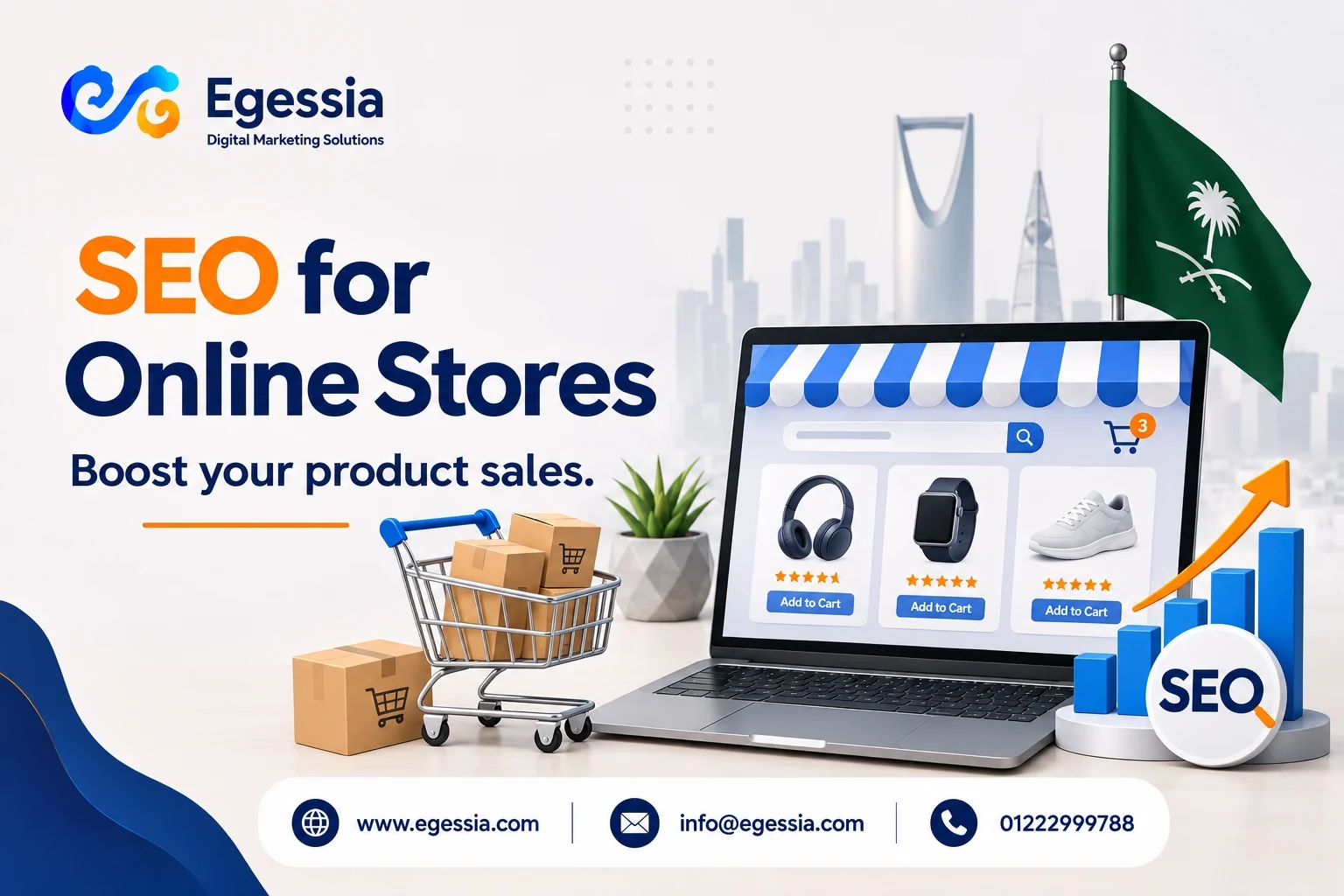
The success of an online store does not depend only on product quality or an attractive design. It also depends on whether customers can find it when they search on Google. This is where ecommerce SEO matters. It is one of the most important drivers of sustainable growth, because it brings free, targeted traffic from people who are already searching for the products you sell. That raises your chances of making sales and reduces your full reliance on paid ads.
At Egessia we offer SEO solutions built for online stores. We analyze the market, study competitors and optimize every part of the store, from the home page to product and category pages, with a focus on user experience and on turning visits into real sales.
Why Do Online Stores Need Professional SEO?
Competition in ecommerce is greater than ever, and showing up in the top results gives your store a chance to reach customers before your competitors do. SEO is not only about improving page rankings. It also improves the whole customer journey, from the search to the completed purchase.
Every product search is a potential sale. When your store is built for search engines, those opportunities are more likely to turn into orders without constantly raising your ad budget.
What Does Ecommerce SEO Mean?
Ecommerce SEO is the process of optimizing all of a store’s pages so they work better with search engines. The goal is to increase the visibility of products, categories and commercial pages in front of customers searching for similar products.
It covers site structure, keywords, product pages, categories, images, store speed, internal linking, structured data and user experience, so that every part of the store supports organic visibility.
How Does Ecommerce SEO Help Increase Sales?
Some people think SEO is only about increasing the number of visits, but the real goal is to attract high-quality visits. When a user lands on a product page because they were already looking for it, they are more likely to buy than visitors from any other traffic source.
That is why SEO for online stores focuses on the commercial keywords customers use while comparing products or before deciding to buy, which makes the traffic more valuable to the store.
- More visibility for products in search results.
- Reaching customers with real buying intent.
- A better conversion rate.
- A lower cost of acquiring a customer.
- Long-term growth.
The Key Elements of Ecommerce SEO
Keyword Analysis
The work starts with understanding how customers search for products, not just the product names themselves. We analyze commercial keywords, long-tail keywords and the questions customers use when searching.
Optimizing Product Pages
Every product page should give a clear, useful description that answers the questions a customer needs answered before buying. That means organizing headings, optimizing images and adding key information in a way that helps search engines understand the page.
Optimizing Category Pages
Category pages are among the strongest pages in any online store because they target broad search terms. We optimize them so they work as landing pages that can attract a lot of traffic while guiding the user easily to the right products.
Improving Site Speed
Page loading speed directly affects user experience, as well as bounce rate and conversion rate, so improving technical performance is a core part of any successful SEO plan.
Optimizing Images
Images are a core element of online stores. Optimizing them includes compressing file sizes, writing alt text and using suitable file names, which improves user experience and helps images show up in image search results.
Does the SEO Strategy Differ Between Small and Large Stores?
Yes. Stores with hundreds or thousands of products need a carefully organized site structure to prevent duplicate content and improve crawling and indexing. Small stores need to focus on the pages that have the biggest impact on sales.
That is why the SEO plan is built to fit the store’s size, the number of products, the nature of the market and the level of competition.
WooCommerce SEO and How to Optimize WordPress Stores
If your store runs on WooCommerce, many factors affect its performance in search results. WooCommerce SEO means optimizing store settings, URL structure, product pages and categories, as well as handling duplicate pages and improving the user experience inside the store.
We also work on improving site speed, reducing unnecessary code and improving indexing so that search engines can easily reach all the important pages.
Does Every Product Deserve to Be Targeted in Search Engines?
Not necessarily. In some cases the priority goes to the most in-demand products, the most profitable ones, or the main categories with the highest search volume. We set priorities in a way that serves the store’s goals and gets the best return from your SEO efforts.
Building a Store Structure That Supports Search Visibility
The success of ecommerce SEO does not depend on optimizing one page or one product. It starts with building a clear structure that helps users and search engines reach all the important pages easily. The more logical the organization of sections, categories and products, the better the crawling and indexing, and the better the browsing experience.
A good structure reduces orphan pages, spreads internal link value correctly, and helps highlight the pages with the highest commercial value in the store.
Organizing Main and Sub-Categories
Categories are not just a way to organize products. They are among the most important pages for targeting keywords with high search volume. So create categories that reflect how customers search, and avoid duplicate categories or similar sections that dilute the site’s strength.
Improving Page URLs
URLs should be short, clear and descriptive of the page content, with a consistent structure across all product and category pages. Avoid long URLs that contain unnecessary numbers or symbols.
Optimizing Product Pages to Increase Sales Chances
The product page is the last step before the buying decision, so it should provide all the information the customer needs without complexity, while helping search engines understand its content accurately.
Write a Unique Description for Each Product
Copying product descriptions from the supplier or from other sites creates duplicate content and lowers your chances of showing up in search results. Write an original description that explains the product’s features, uses, benefits and the specifications customers care about.
Organize the Data on the Page
Users need quick access to important information such as specifications, sizes, materials and usage. The more organized and easy to read the content is, the more the customer trusts it and the more likely they are to complete the purchase.
Optimize Images on Product Pages
High-quality images help customers decide, but they should also be optimized to reduce their size without hurting quality, with suitable file names and alt text that describes the image.
Optimizing Category Pages to Increase Organic Traffic
In many online stores, category pages get more traffic than product pages, because they target general search terms customers use at the start of the buying journey.
That is why these pages are optimized with suitable intro content, well-organized products inside the category, and better headings and meta descriptions, along with filters that help visitors find the right product easily.
The Importance of Internal Linking in an Online Store
Internal linking helps search engines discover important pages and pass value between them. It also makes it easier for users to move between related categories and products.
An internal linking strategy inside the store includes linking between:
- Related products.
- Products and categories.
- Main and sub-categories.
- Educational articles and product pages.
- Service pages related to the store.
Handling Discontinued or Out-of-Stock Products
One of the most common mistakes that hurts store performance is deleting product pages as soon as the stock runs out. If the page gets traffic or has a good ranking, it is better to keep it, state the product’s status, suggest alternative products, or redirect it properly when needed.
Managing these pages professionally preserves the site’s strength and prevents losing traffic earned through search engines.
How Does Content Affect the Success of Ecommerce SEO?
Content is not limited to product descriptions. It also includes category pages, brand pages and educational content that helps customers choose the right products.
When the store answers the questions in the customer’s mind before they buy, trust in the site grows and visitors spend more time on it, which has a positive effect on overall performance.
Content That Supports Products
Articles that explain how to use products, compare them or set out selection criteria help bring new traffic from search engines, and then guide visitors to the right product pages inside the store.
Common Mistakes That Hurt SEO for Online Stores
- Duplicating or copying product descriptions.
- Having many pages without enough content.
- Creating similar categories that target the same keyword.
- Slow loading of store pages.
- Not optimizing images.
- Relying on repeated titles.
- Weak internal linking.
- Neglecting to update products and old pages.
Measuring the Results of Your SEO Strategy
SEO success is not measured by the ranking of one keyword. It is measured by a set of indicators that reflect steady store growth, such as higher organic traffic, better product visibility, a higher conversion rate and more revenue from free search.
We also analyze visitor behavior in the store to find the best-performing pages, the products with the highest sales rate, and the opportunities that can be developed in the next stages of work.
Why Choose Egessia to Run Your Ecommerce SEO?
The success of any online store depends on a clear strategy that combines technical improvements, content, user experience and customer behavior analysis. That is why Egessia does not stop at improving your store pages’ rankings in search results. We build a complete plan that helps increase targeted traffic and turn it into real sales.
We start by analyzing the store from every angle, then study competitors and keywords. After that we carry out a step-by-step optimization plan covering product pages, categories, technical performance and internal linking, while tracking results and refining the strategy based on real data.
A Work Plan That Fits Each Store
Every online store has different goals, so we prepare an SEO plan that fits the number of products, the nature of the market, customer behavior and the level of competition, to make sure the effort goes to the pages that deliver the most commercial value.
- A full analysis of the store’s current situation.
- A study of competitors and keywords.
- Optimizing product and category pages.
- Improving the technical structure and site speed.
- Building an effective internal linking strategy.
- Tracking performance and delivering regular reports.
- Working to improve the conversion rate alongside visibility.
The Importance of Product Schema in Online Stores
Structured data for products (Product Schema) helps search engines understand the content of product pages more accurately. This increases the chances of showing information such as price, ratings and availability in search results, which attracts the user’s attention and raises the click-through rate to the store’s pages.
Structured data also improves how products are displayed in search results, which gives the store a better chance of getting targeted traffic compared with pages that do not use this type of data.
How Do We Measure the Success of an Ecommerce SEO Strategy?
SEO success does not depend on the progress of one keyword. It is measured by a set of indicators that reflect the store’s overall growth, such as higher organic traffic, better rankings for product and category pages, a higher click-through rate, a better conversion rate and more revenue from free search.
We also review page performance continuously to find improvement opportunities, update content and develop the internal structure, so the store stays competitive as user behavior and search results change.
Invest in Your Store’s Growth With Ecommerce SEO
If you are looking to increase sales in a sustainable way, ecommerce SEO is a long-term investment that helps attract customers who are already searching for your products, without fully relying on paid ad campaigns.
At Egessia we carry out an integrated strategy that covers SEO for online stores, WooCommerce SEO optimization, developing product and category pages, improving technical performance and internal linking, to help your store achieve continuous growth in traffic and sales.
Conclusion
Strong ecommerce results start with building a store that search engines can understand easily and customers can use with confidence. That is why ecommerce SEO is a core element in increasing visibility, improving user experience, raising conversion rates and achieving sustainable sales growth.
Whether you run a new store or a store with thousands of products, applying a professional strategy that covers content, technical structure, product pages, categories and structured data gives your store a better chance to compete and reach the right customers at the right time.
If you want to improve your online store’s performance and increase its sales through free search results, the Egessia team is ready to help you build and carry out a complete SEO strategy that meets your business goals and supports its long-term growth.